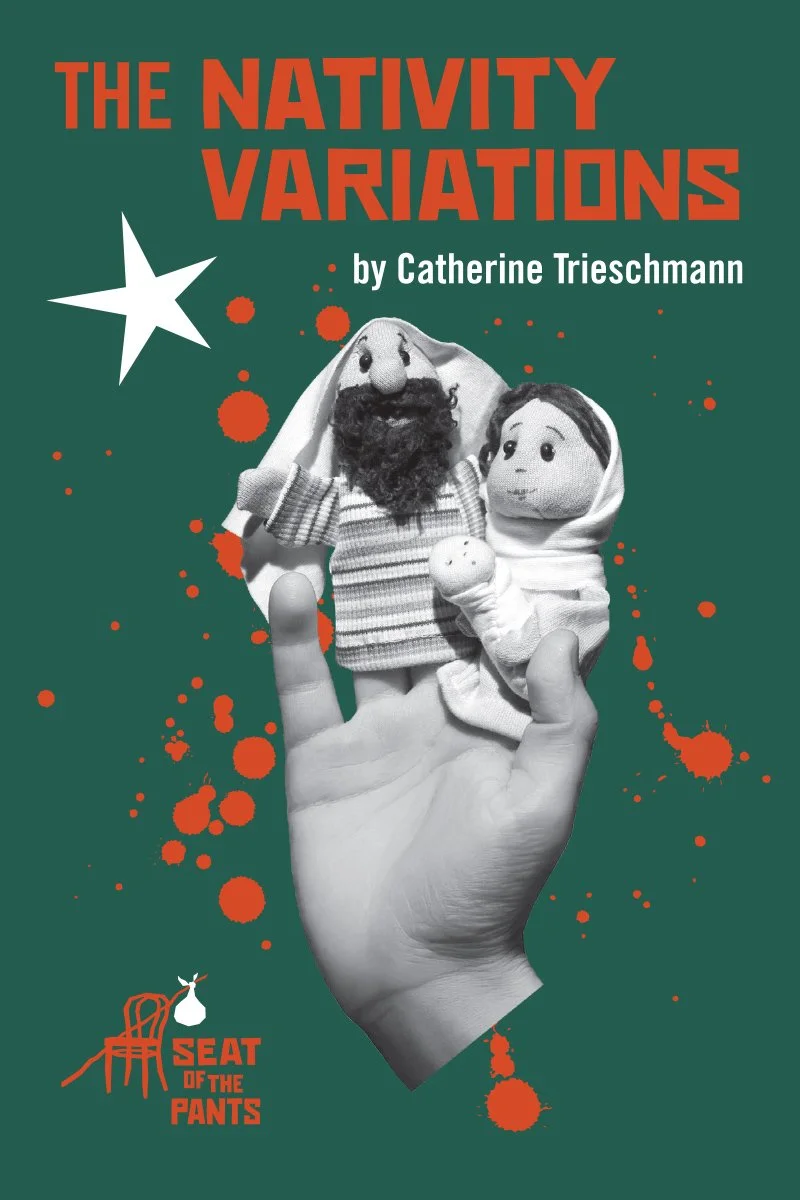
THE ART OF TRUST, AN ASPIRATION AND PRACTICE - BY MICHAEL GLAVAN
It’s a busy season. We’ve opened our first show of the season, mounted our second workshop of the season, begun developmental dramaturgy for next season’s opener, Hellfire by Julia Fisher, and launched process rehearsals for The Nativity Variations. Additionally, I’m Tetris-ing work sessions with playwrights and actors across town and picking up gig-work here and there. Amid all this making, teaching, shaping, hustling, questioning, and discovering, one word keeps returning to me: trust.
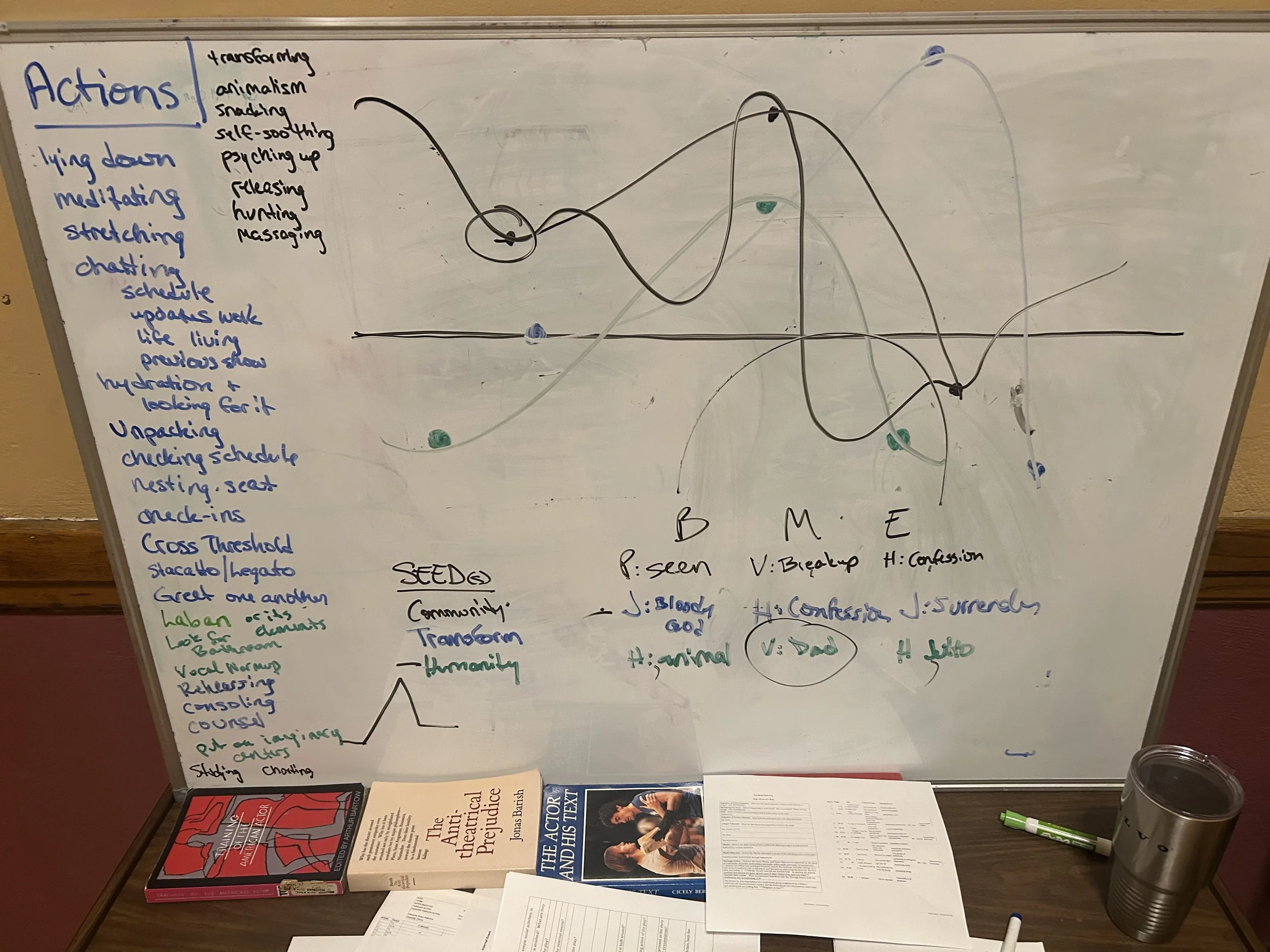
In my work as a dramaturg, whether developmental or otherwise, trust is both a philosophy and a practice. I have to trust that a play will reveal itself. Not become what I think it ought to be, or what some critic might wish it were, but emerge more fully into what it already is. I have to trust that the playwright has done the necessary work—that the form and the story are in conversation, that each is serving the other, and that somewhere within their union is the fullest, most complete expression of the play.
There is something sacred in that possibility: the sense that a work of art is trying to become itself, and that our task is to listen closely enough to recognize it. When I trust that something singular is waiting to emerge, the work becomes clearer. I can investigate, interrogate, and challenge the play in service of its flourishing, rather than fixating on what it isn’t. The question shifts from How do we fix this? to What is this asking of us?
Working with Julia Fisher [and some extraordinary day-player collaborators], I’ve watched the world of Hellfire wondrously expand with increasingly high stakes, palpably complex atmospheres, and gorgeous transformations of character. It’s a privilege to be part of a process in which the world of a play grows more vivid and more particular with each encounter. We lean in, listen, and trust what the piece is telling us as the story and the means of telling it begin to take clearer shape.
This kind of trust asks something of me, too. As an artist, I have to take my hands off the wheel. Sometimes I have to awkwardly climb over the center console and settle back into the passenger seat. Enjoy the journey. Observe. Reflect. Receive. Trust the ride is enough to learn and grow.
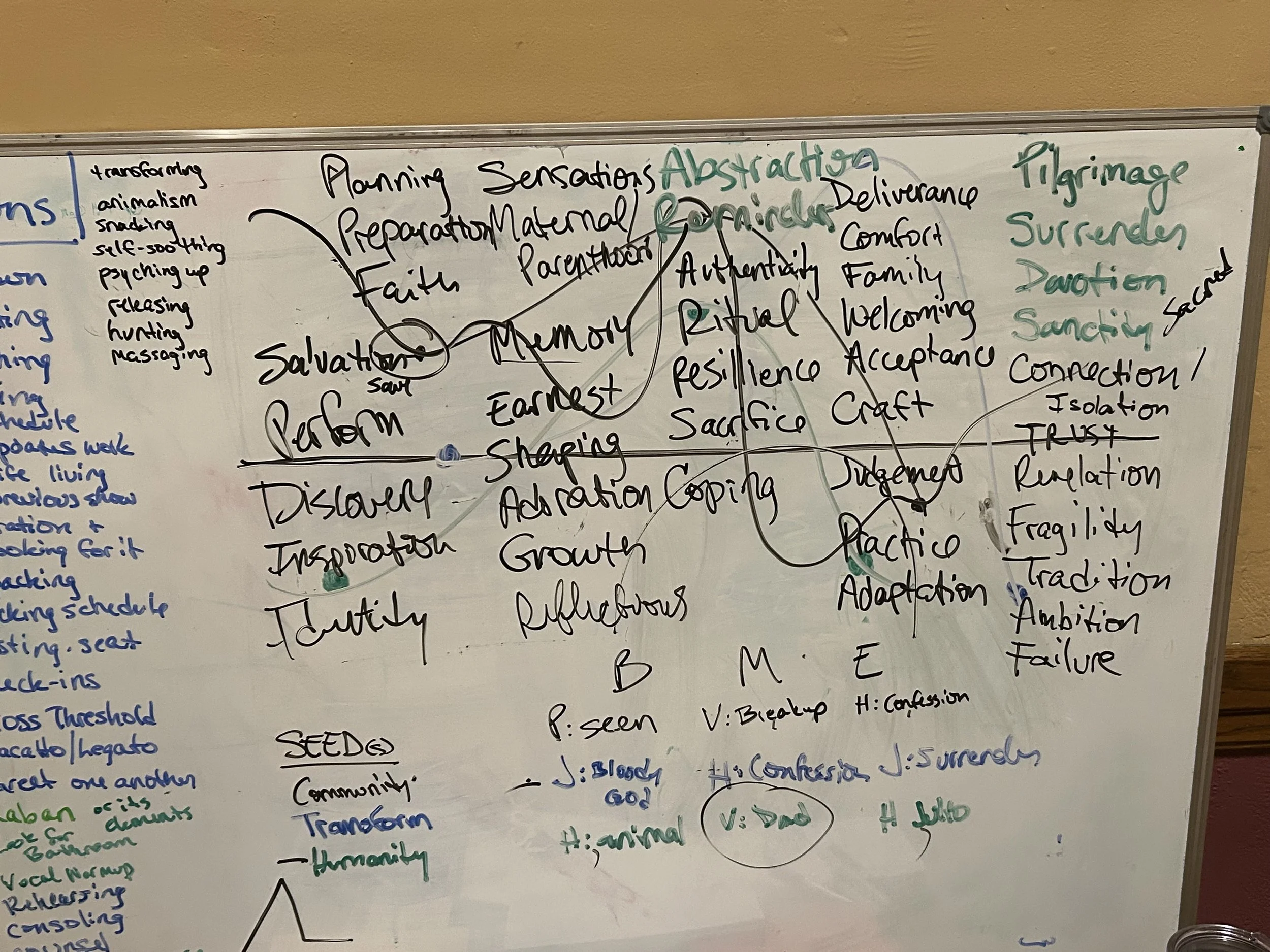
My work on Hellfire, along with my work with other playwrights, has been a generous education in how I approach The Nativity Variations as a director. Catherine Treischmann has written a play that is wacky and wild, hilarious and tender. Every time I read it, I laugh heartily. I cringe. And, almost inevitably, I end up crying. There is so much to chew on, so much to get lost in, so much packed into its pages. The temptation to linger in the comedy—to do something with the text, to heighten a moment, to embellish what is already funny—is considerable. As artists, we can become attached to the feeling of making, of shaping, of leaving our fingerprints on the work. It feels productive. It feels like progress. But often, it’s a trap.
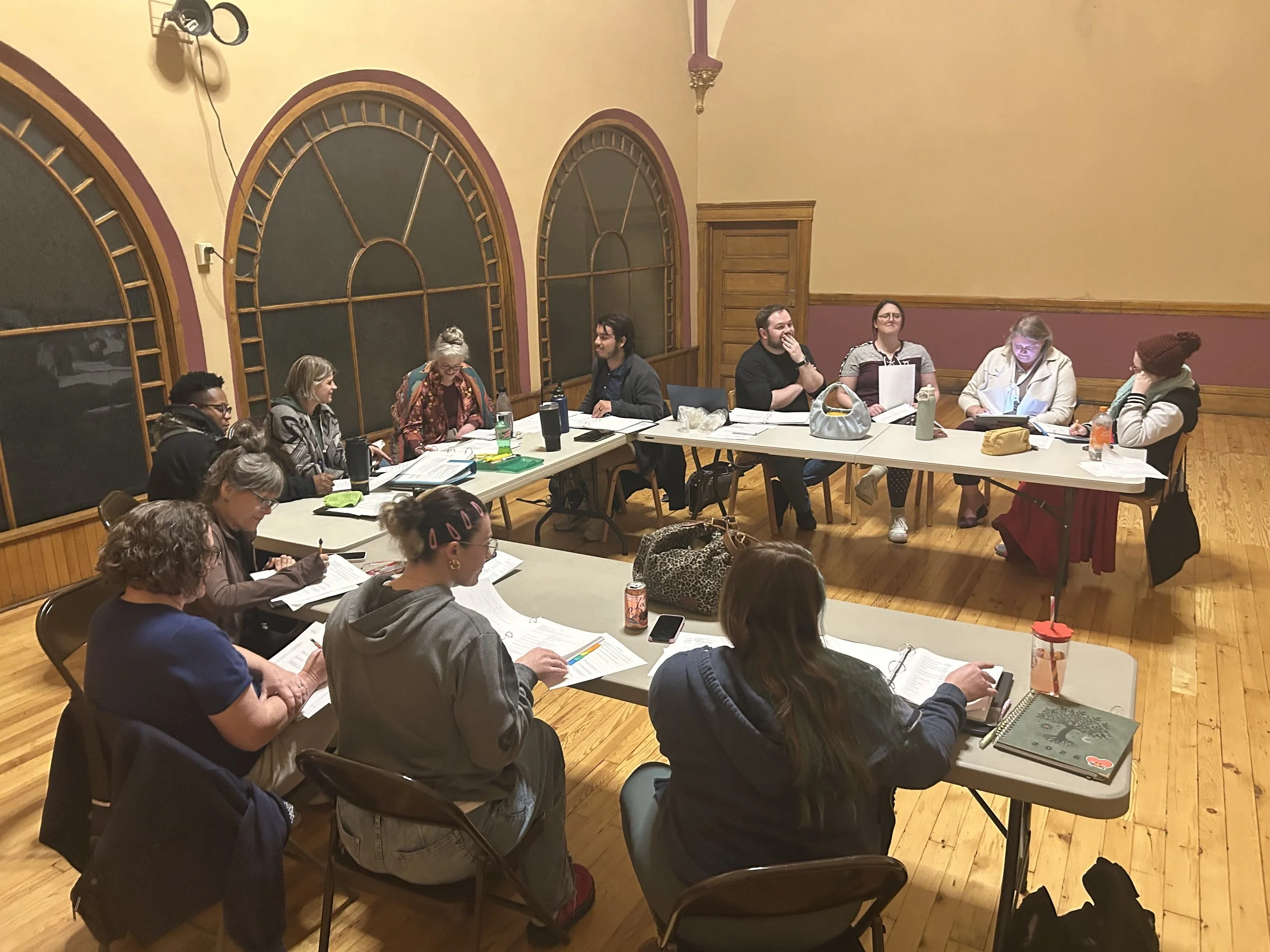
Sometimes the impulse to intervene is really an expression of mistrust: the suspicion that the words on the page aren’t enough, that the indicated action needs our help, that the play must be pushed toward some greater effect. We mistake our restlessness for insight. We confuse adding something with discovering something.
So I keep returning to the script. I sit with it. I listen. I attempt to trust. And, slowly, I find myself discovering—not inventing—the nuances, shades, and textures already alive within its narrative and form.
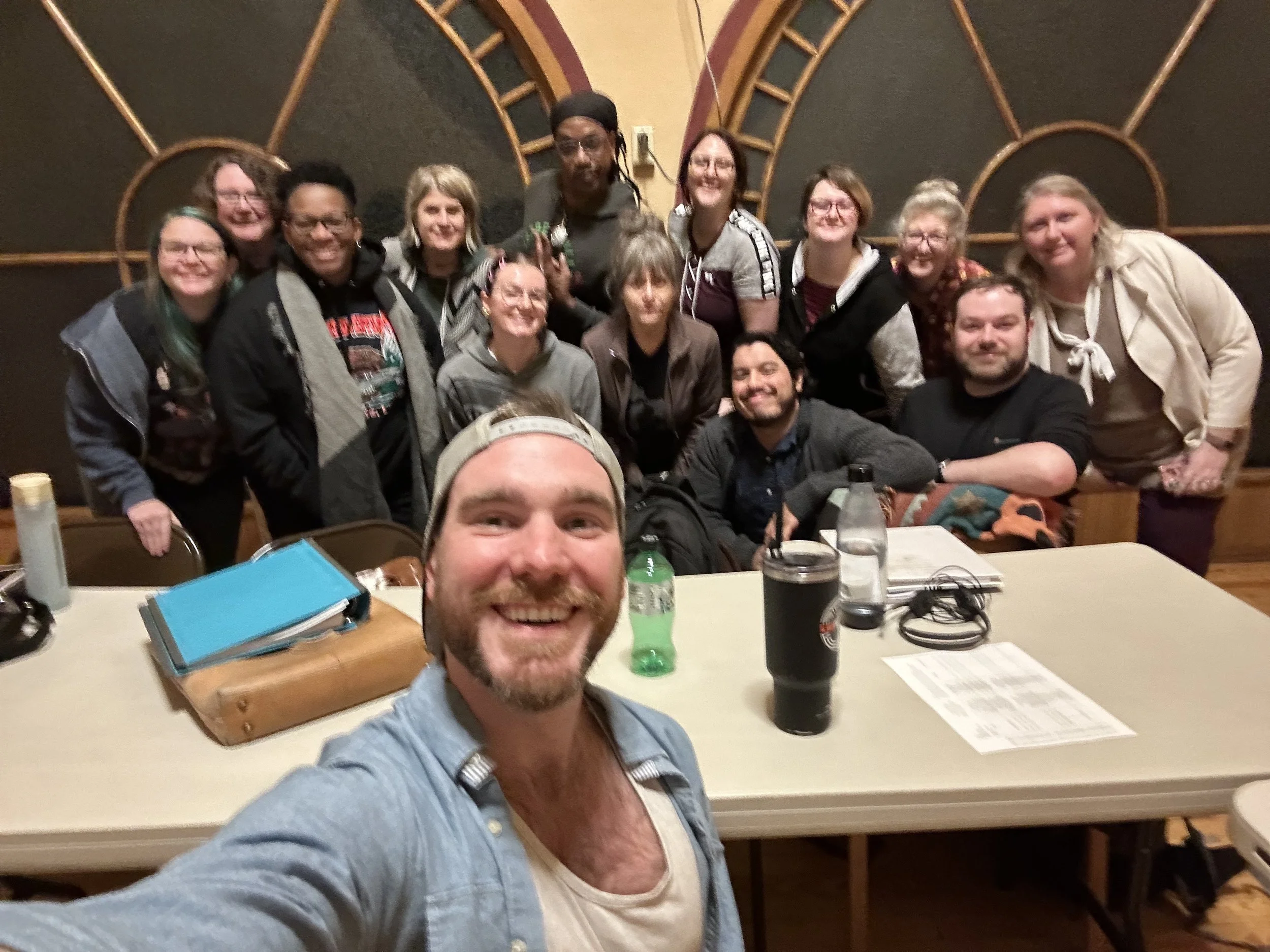
The Nativity Variations follows a diverse group of people facing the painfully recognizable high stakes of their individual lives. In an effort to cope, pursue their passions, teach, learn, grow, escape, etc., they come together to tell the Nativity story, taking some rather drastic artistic liberties under the guidance of an untrusting director-turned-playwright. Over the course of exploring radical variations of this traditionally simple story, a threshold of trust begins to manifest uniquely for each of these characters. Whether it’s financial strain, familial strain, or the strain of an encroaching theatrical debut, the pressure of the play pushes these characters toward one another. They begin to risk trusting each other, and in that risk discover complicated, often hilarious forms of compassion and care. Their connection is neither simple nor tidy. It doesn’t erase their difficulties or resolve every contradiction. But it makes room for something generous to take root.
It’s the kind of story that gives me hope.
Not because it promises that people will suddenly understand one another, or that a community can be built without friction, but because it suggests that compassion might begin somewhere less certain: in the willingness to stay, to listen, to make room for another person’s truth. In the decision to offer care before we know exactly what it will cost us.
I think I aspire to that… or maybe want some of that. I think we all deserve it.
In the rehearsal room, in the pages of a play, in the fragile business of making something together, trust is damn hard. It’s staying in the car, but finding comfort in a passenger seat. It’s not the absence of questions, but the willingness to keep asking them with care. To resist the urge to control every outcome. To believe that what is emerging might be more surprising, more complicated, and more beautiful than what we could have planned.
To let the story take us where we need to go.
And with that in mind- check out our caravan program and catch a free ride share to The Nativity Variations at Malone University, December 4-20! Tickets are on sale now.