A CHAT WITH HILLARY WHEELOCK
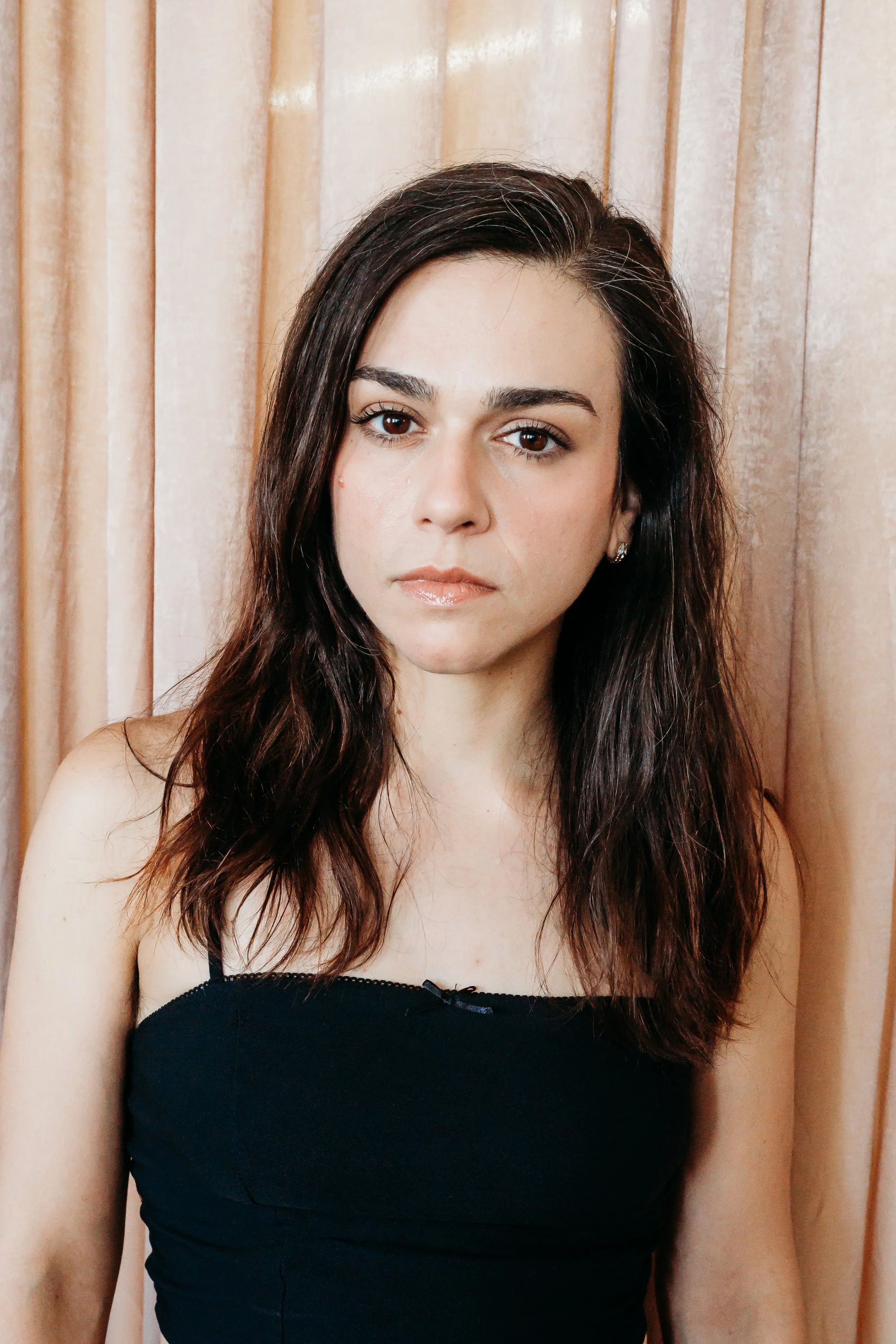
This week, we were fortunate to have some time to chat with Hillary Wheelock, one of the actors making her Seat of the Pants’ debut in our upcoming production of Elephant’s Graveyard.
Who are you playing in the show? What intrigues you about the character as we’re getting started? What are you looking forward to and what do you expect to be challenging?
I play the Tour Manager, named Lou. As we're beginning rehearsal for this show, I'm really fascinated by how Lou’s small choice in the beginning of the story affects everything in the trajectory of the play; all the while, everyone in the story has some shred of culpability for the events that unfolded. I'm also curious about exploring the balance of making my character intriguing and likable to the audience while also embodying this enmity she holds towards another character, the Trainer, Shorty. Finding that balance is going to be a challenge. The best villains are always people you want to keep watching, and although this show does not have an outright villain (although some people are much worse than others), I don't want to create a character that seems like a conniving henchman caricature. She is a human, driven by passion and money, just like many of us are - and that drove her to selfishly and unknowingly make a choice that would change the history of a town and a circus.
Though we’ve only had a few rehearsals so far, what have been some of your thoughts or takeaways on working this way – with an extended period of time and process to live with the play?
The extended rehearsal period is one of the most exciting gifts that I have been given in the Cleveland theatre community. In many other shows and with many other companies, I have lamented that it felt like we had to compress rehearsals into quick timelines. This didn't allow for play and exploration: they allowed the actors to be off-book for tech week, and that was about it. Having a longer rehearsal process that takes place over the course of a few months gives creatives so much more license to play with each other, explore the text, carve out and hone the character, differentiate them from others, and connect with the rest of our cast & production team in a way I've only dreamt of. I deeply appreciate the respect of time that Seat of the Pants also holds in these extended rehearsal processes — the work that we do before we kick into full gear still allows an artist to be in another play, have a night job/gig, maintain their home, and much more. It also gives us time to sit with the script and explore it in a much more thorough way than most companies I have ever worked with.
Along with this exploration, I was fortunate enough in my undergraduate education at Case Western Reserve University to study the Michael Chekhov technique. Getting to do Chekhov technique work in a classroom setting is radically different than breaking down Chekhov’s book To the Actor and applying it to a rehearsal process. In college, I never had the opportunity to explore a technique specifically through a show. Getting to step back into Chekhov technique, from its roots to its petals, and applying it specifically to this show is invaluable to my personal continuing education as an artist. Sometimes you forget that, even though you have these tools in your toolbox, they can get rusty if you're not using or re-exploring them in your own time. Seat of the Pants has refreshed this technique for me in this rehearsal process so far, in a way that I am all too excited to keep experiencing.
What interested you in being part of the project? What are some of the things that you like or that drew you to the play?
I had been interested in working with Seat of the Pants for some time but never had the right opportunity with other shows that I was working on or moving out of the state. The company always puts on challenging work, and when I moved back to Cleveland in 2024 after 4 years away in Wyoming and Colorado, I realized Seat of the Pants was producing a lot of work like companies I worked with out west! When I saw they were doing a George Brant play, I was over the moon and incredibly interested. I threw my hat in the ring for anything I could in the season, but Elephant’s Graveyard was the one I had my eyes on. I appreciate George Brant’s work deeply, and I love that Cleveland has been putting more of his writing on its stages. I've met him in person, and he is such a sweet, kind human with a glowing personality. From friends that have worked on his plays before, I know that he is interested in how his work gets produced. I read the script and was immediately enthralled by the story being told. This play is a memory play and the themes it explores surrounding the human pursuit of justice are discussions that we need to have more of and more often. I was also fascinated by the fact that this play essentially partially took place in a circus. I have only ever seen one other play that involved circus characters, if I recall correctly. The circus world is a wild place. There's this air of existence as a vagabond, while also being an artist and troupe mate, while also being some of the toughest performance work that you can do. Our play takes place in 1916, but even in the modern context, if you are looking to be a performer/actor/clown, Barnum & Bailey Clown College was the top performance school for you to attend. I have maintained fascination around the different aspects of the circus, whether it's physical performance, clowning, or the darker histories like freakshows. Circus is an art embedded into America, with a history as dark as the country’s.
How do you generally work as an actor when you’re approaching a new role?
I personally love to read and reread the play multiple times over. When I read or memorize lines, I tend to do that work out loud. I love to discuss and imagine. The Michael Chekhov technique idea of “imagine it, see it, be it” sits deeply with me. I think about who I am seeing in my head and who I am hearing speak when I read those words. Once I have that character fleshed out in my imagination, I do the work to try to put them into my body. With the tour manager, it's interesting to consider physicality; I'm having a lot of fun playing with it. For example, I think that Lou is a couple inches taller than I am, and the way that that affects how I move (while also knowing some of the pieces of costume that I may be wearing) is building this walk, these personalized body tensions, and the faces that Lou would make. As I continue to read the play out loud and we continue to explore, her dialect is going to settle in, which is going to enhance the physicality more. As well, I’m an actor who is a stickler for words, so referring to the script as often as possible is important to me. The playwright wrote the story in a particular way, and it is my job as an actor to deliver those words in the way that they are written.
How would you describe the major themes or ideas of the play to someone who asked?
I've had to explain this to some friends and coworkers who were interested in the play! This play is a deep exploration into the human pursuit of justice and how far is too far; and what consequences we carry back home with us when we commit to the wrong choice, whether or not we know it. I mention often that this play explores racism. The crux of the play is an allegory for racism and lynchings in the 1900s in America.