ASKING QUESTIONS, THANK YOU PLAYWRIGHTS: BY MICHAEL GLAVAN
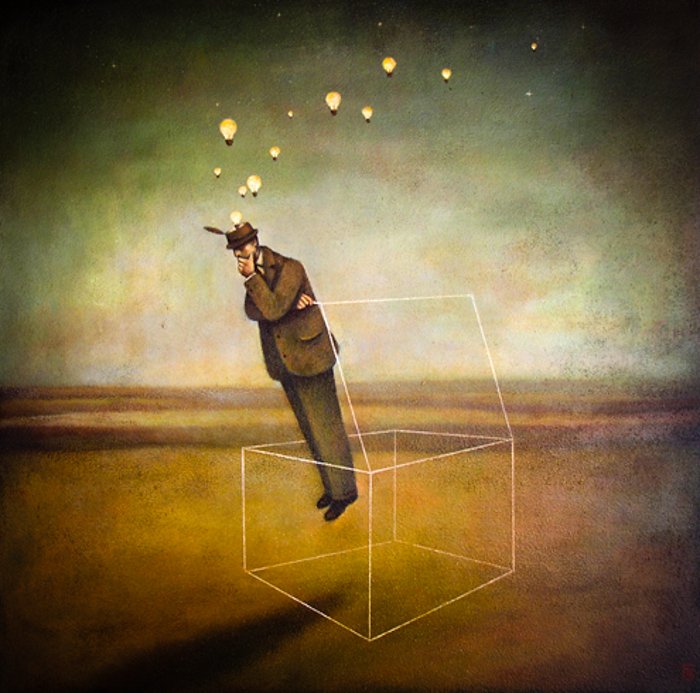
Lately I’ve been contemplating the limits of “process” and/or at what point process becomes prescription? I think most actors and directors will tell you that each play they embark on reveals to them what sort of process it requires. I hope that the tools I use have helped me create some starkly different characters and stories, but I’m also conscious that my bias for certain tools may be putting blinders on me and that sometimes my work is less transformative than it is stylized or affected (*gag*).
For this reason, I journal, [I blog,] and I spyback to self-evaluate: was my work as clear and as complete as I could create? Why or why not? How do I stop myself from using the same tricks and tools in this play? How do I catch myself leaning into habits and approach this script with fresh intentional eyes?
Two things keep coming up when I journal about this:
OUTLOOK: Stay curious - challenge certainties.
MINDFUL ABSTRACTION: How would I discover this story if I had no script? In what genre or mode does this story exist? Under what circumstances does this story have to happen?
Lately I’ve had the opportunity to work a lot more with playwrights in and around Cleveland as a sort of developmental dramaturg. This has been some of the most fun work of my career so far. When we meet, we work on one thing: how to tell this story as clearly and completely as we can.
What’s been most surprising is that even without a script, the developmental process still reveals itself in the collaboration in unique and specific ways with each play. When I’m meeting with these playwrights, we talk about the world in which this play happens, we talk about the lives of the characters, and we talk about the rules of this play/mode of storytelling.
I can’t stress this enough: it is so important to ask questions about the world of the play instead of attempting to write the play for a playwright. I’m glad my ambitions to be a playwright in this world were brief. It’s not my strength. The best thing I can do for any artist is to ask questions that prompt them to create. That’s it. IF you find yourself reading/watching a play and you wish it had a different plot point - go write your own play (feel free to reach out if you get stuck ;)).
There’s something magical and instructive about a playwright’s voice giving life to a story that has gripped them that immediately starts to shape and focus the process of developing their play. Objectives, actions, structure, genre, stakes, settings, conflicts: these all begin to flood and pour out during our work sessions, leaving us the creative challenge of curating what serves this story best. The work from one playwright to the next is radically different, and I’m finding myself really inspired by the unique transformations these plays undergo.
I have a profound gratitude and awe for these playwrights because there is a kind of hostile courage they possess in constructing not just an interesting story, but an entire world, the mode of effectively illuminating that world, the relationships, the lives. Every choice is instantly a world-building decision. They have to build the canvas while discovering what kind of paint and palette it should have. They are alchemizing the marble/granite/bronze while they are chiseling the form and negative spaces. It’s a radical artform. Wildest yet is that, despite its uniquely personal expression, it is immediately given over to someone else to interpret. Brutal and beautifully collaborative.
When I began working with these playwrights, I was anxious that I only knew how to execute my own artistry (and maybe even that’s debatable). But over these last few months, developing new scripts, I’ve grown more and more appreciative that Process isn’t a regimented course or a strict code or a set path toward finality. It’s a joyful embrace of discovery that is unique to each artist, an insistent and encouraging “Yes-and!” It’s the same joy I feel when we get into workshops - when inspiration strikes someone without the pressure of the script or finished product in mind; there’s just nothing better. There’s a discovery and an instant connection to a specific world of possibility and storytelling. Maybe it’s because the only parameter to discovery is to learn rather than to submit to the ambitions of a production?
Having embarked in this new dramaturgical work with playwrights, I’m learning that the only limits to process come from judgments and fear that there is an “equation” for “right-ness" or “good” art. AND I’m learning that transformative art stands up to interrogations - it permits and answers challenges. From curiosity blooms any number of rich answers.